

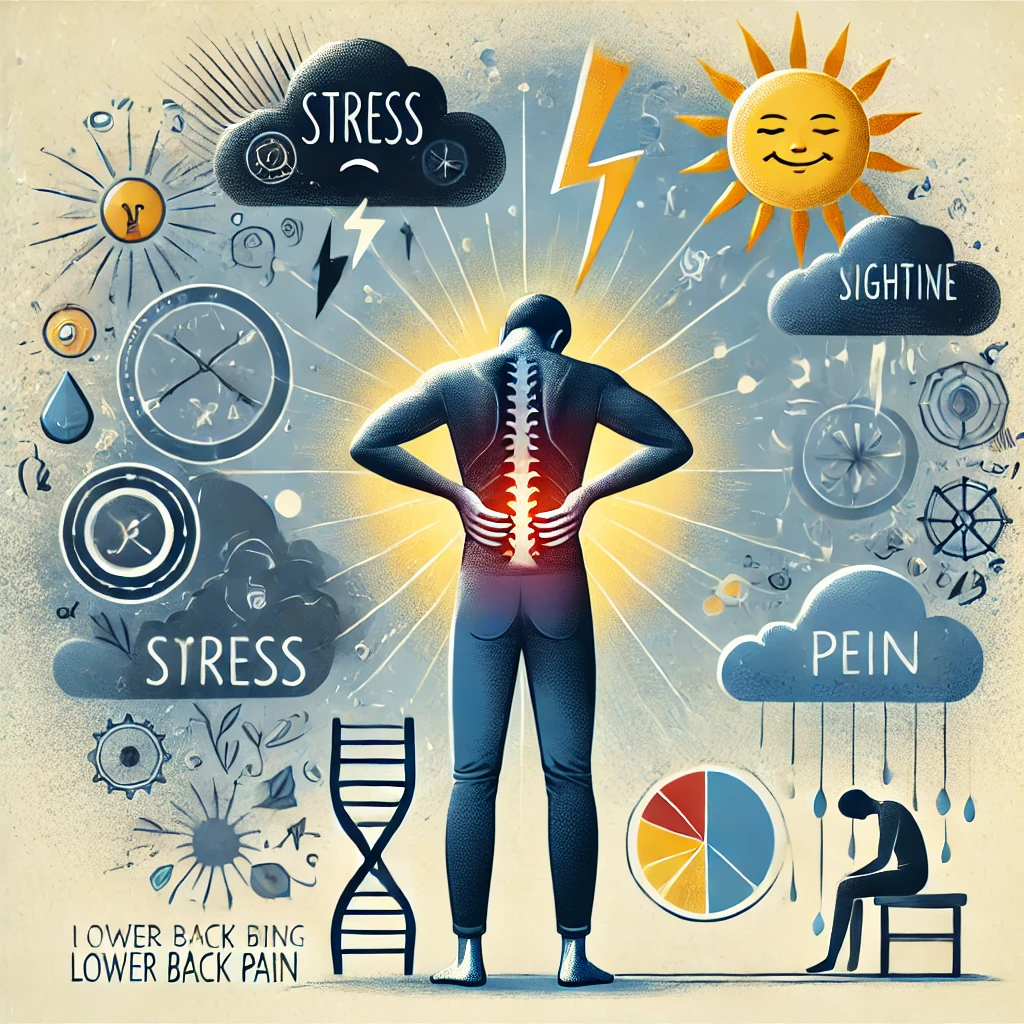
Pain is worse when your mental state is worse. Learn this and use it to your advantage. It is possible and very effective: Everyone knows that in moments of sudden great joy, pains, tensions, and discomforts disappear. Conversely, in a poor mental state, pains increase, and sensitivity to them heightens. Our psychology plays a crucial role in the intensity and duration of the pain we feel, especially in the case of lower back pain.
The Relationship Between Psychology and Lower Back Pain
Psychology affects how we perceive pain and our ability to manage it. In situations of anxiety, stress, or depression, our bodies can become more sensitive to pain due to increased production of stress hormones like cortisol. These hormones can exacerbate pain and reduce the body’s ability to cope with it.
Support Strategies
To improve your mental state and reduce lower back pain, try the following strategies:
- Maintain Positive Thinking: Changing your mindset can reduce pain perception. Focus on positives and find ways to enhance your mood.
- Physical Activity: Exercise increases the production of endorphins, which are natural painkillers.
- Relaxation and Meditation: Techniques like yoga, meditation, and deep breathing can reduce stress and help manage pain.
- Support from Loved Ones: Communicating with friends and family can provide emotional support and reduce feelings of loneliness.
- Professional Help: Don’t hesitate to seek help from a psychologist or therapist to deal with anxiety or depression.
Remember that taking care of yourself includes both your physical and mental health. With the right support and strategies, you can reduce lower back pain and improve your quality of life.
 EN
EN  EL
EL